
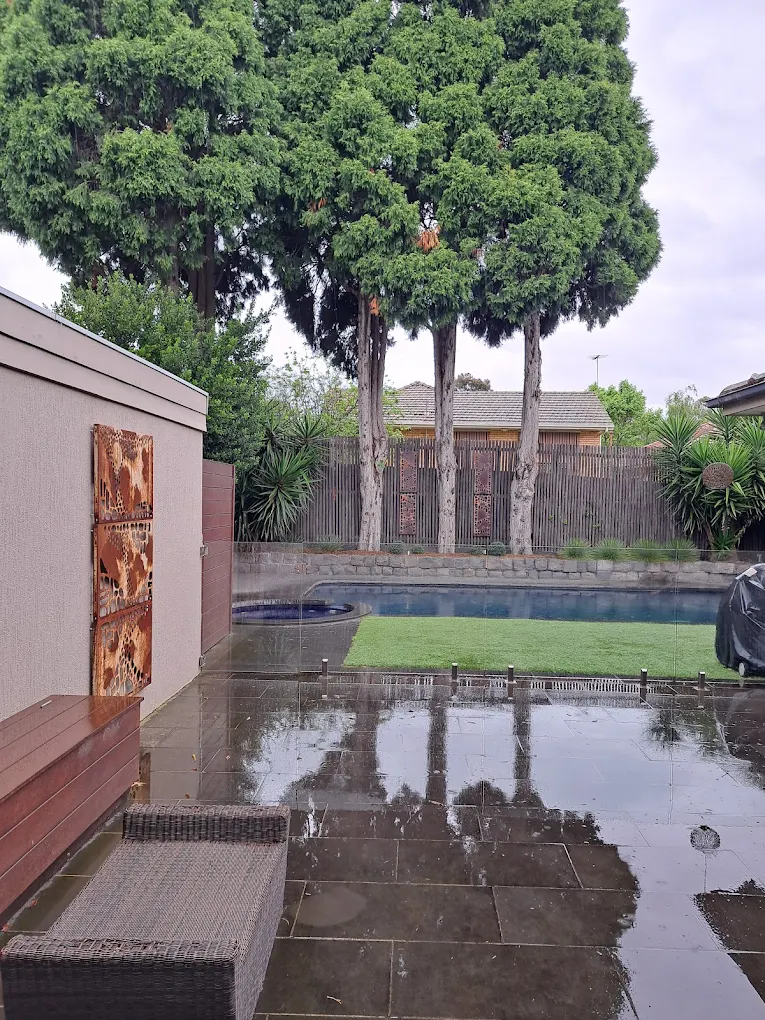
In many Melbourne homes, it’s common for boundary fences to sit right alongside or even form part of the pool area. Using these existing fences might seem convenient and budget-friendly, but in Victoria, there are strict rules that determine whether a boundary fence can be considered a compliant pool barrier.
This blog explains when a boundary fence might be suitable, what modifications are often needed, and how Tom from Balwyn Pool Fence Inspections can help you avoid compliance issues.
What the Regulations Say in Victoria
In Victoria, the Building Regulations 2018 and relevant Australian Standards clearly outline what is required for a pool barrier. A boundary fence can form part of the pool barrier, but only if it meets all the same safety requirements as a standalone pool fence.
For new pools, a boundary fence must be compliant with AS1926.1 – 2012. It must meet the following conditions:
- It must be at least 1.8 metres high when measured from the pool side
- There must be a clear non-climbable zone of 900mm on the inside of the fence
- The materials must be solid and secure with no footholds or gaps that allow climbing
Common Compliance Problems
Even when a boundary fence appears solid, some do not meet the requirements without modifications. The most common issues include:
Horizontal rails on the pool side
Standard timber paling fences often have rails that face inward, creating an easy ladder for climbing. If this is the case, the fence will needs to be treated if they are within 900 mm of the top of the fence to meet compliance.
Overhanging trees and nearby objects
Trees, planter boxes, garden furniture, or even cubby houses within 900mm of the top of the fence can breach the non-climbable zone and cause a failed inspection.
Fence height
Many backyard fences are under 1.8 metres tall, especially older ones. This may require adding an extension panel or installing a new compliant fence section.
Shared fences
Boundary fences are often shared with neighbours. Even if your neighbour is responsible for one side, you are still legally responsible for ensuring the fence is compliant if it forms part of your pool barrier.
How Tom Assesses Boundary Fences
Tom from Balwyn Pool Fence Inspections is highly experienced in evaluating complex fence setups. During an inspection, he assesses not only the physical condition of the fence but also the full layout, surrounding objects, and how the fence functions as a safety barrier.
Tom will:
- Check the height and structure of the boundary fence
- Review the non-climbable zone on your side of the fence
- Provide guidance on fixing any issues or hazards
- Recommend appropriate solutions like perspex screens, barrier guards, or alternate fence placements
He also handles reinspections after changes have been made, helping you meet council requirements without delay.
When You Might Need an Alternative
If your boundary fence is too low, too old, or too complex to fix cost-effectively, Tom may recommend:
- Installing an internal fence closer to the pool
- Using clear panels to raise height without blocking views
- Redesigning the fence layout for long-term compliance
These options can save time and money by reducing future risks and reinspection costs.
Final Thoughts
It is possible to use your boundary fence as a pool barrier in Victoria, but only if it meets very specific safety standards. Making assumptions can lead to failed inspections, unexpected costs, and legal issues with your council.
If you’re unsure about your setup or planning to install a new pool, book a professional inspection with Tom at Balwyn Pool Fence Inspections. He services Balwyn and surrounding Melbourne suburbs and provides straightforward, honest advice to help you stay compliant and keep your pool area safe.